As Ramadan approaches each year, Muslims in Pakistan prepare to fulfill an important obligation called Sadqa-e-Fitr, commonly known as Fitrana. This charity must be paid before the Eid-ul-Fitr prayer so that people in need can also celebrate Eid with dignity.
For Ramadan 2026, Islamic scholars and authorities in Pakistan have announced updated Fitrana rates based on the current market price of staple food items such as wheat, barley, dates, and raisins.
Here is the verified Fitrana amount in Pakistan for 2026, along with an explanation of who must pay it, how it is calculated, and when it should be given.
Fitrana Amount in Pakistan 2026 (Per Person)
According to announcements related to the Council of Islamic Ideology (CII) and leading scholars in Pakistan, the minimum Sadqa-e-Fitr amount for 2026 is Rs. 300 per person, calculated on the basis of wheat flour prices.
Official Fitrana Rates for Ramadan 2026
| Food Item | Fitrana Amount (Per Person) |
|---|---|
| Wheat (Gandum) | Rs. 300 |
| Barley (Jau) | Rs. 1,100 |
| Dates (Khajoor) | Rs. 1,600 |
| Raisins (Kishmish) | Rs. 3,800 |
| Munqa / Premium Dates | Rs. 5,400 |
These amounts represent the minimum charity required for each individual in a household. Families should multiply the amount by the total number of people in their home.
For example:
| Family Members | Fitrana (Wheat Rate) |
|---|---|
| 1 person | Rs. 300 |
| 4 persons | Rs. 1,200 |
| 6 persons | Rs. 1,800 |
| 8 persons | Rs. 2,400 |
Scholars often encourage those who can afford it to pay according to higher food categories like dates or raisins, which provide greater support to the poor.
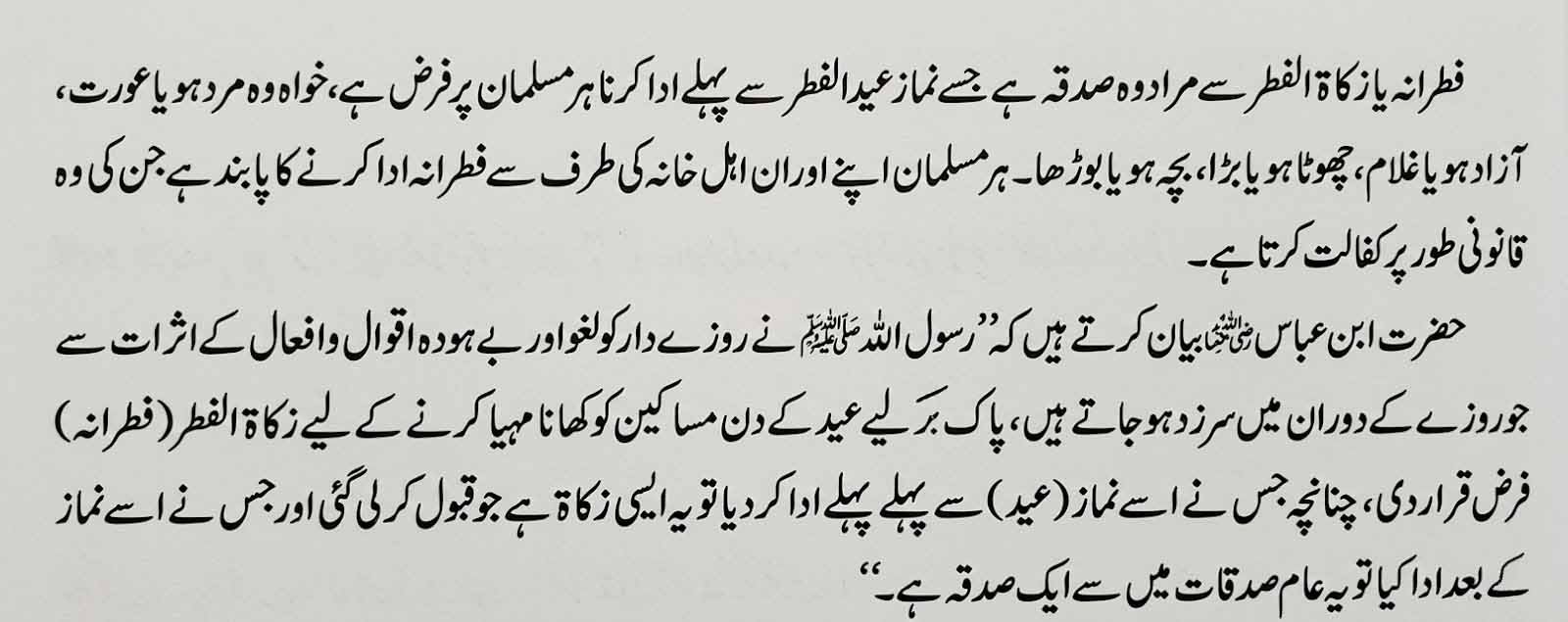
What Is Fitrana (Sadqa-e-Fitr)?
Fitrana is a mandatory charity given at the end of Ramadan. It purifies a person’s fast and helps the less fortunate celebrate Eid.
Islamic teachings mention that the Prophet Muhammad (PBUH) made Zakat-ul-Fitr obligatory for every Muslim, including men, women, children, and even newborns.
The charity is typically calculated based on one saʿ of food, which equals roughly 2.5 to 3 kilograms of staple food such as wheat, dates, or barley.
In modern times, many Islamic authorities allow Muslims to pay the equivalent amount in cash, making it easier for families to distribute aid.
Who Must Pay Fitrana?
Fitrana is required for every Muslim who has sufficient food or wealth beyond basic needs.
Generally, the head of the household pays Fitrana on behalf of the entire family.
This includes:
- Adult men and women
- Children
- Elderly family members
- Dependents living in the same household
- Newborn babies before Eid
If someone lives alone, they must pay the amount for themselves.
When Should Fitrana Be Paid?
The timing of Fitrana is very important.
Islamic scholars recommend paying it before the Eid-ul-Fitr prayer so that the needy can buy food or essentials in time for the celebration.
Most people in Pakistan choose to pay Fitrana during:
- The last week of Ramadan
- The final days before Eid
- The night before Eid-ul-Fitr
Paying earlier is often encouraged because it allows charities and mosques to distribute assistance in advance.
Difference Between Fitrana, Zakat, and Fidya
Many people confuse Fitrana with other forms of Islamic charity. Each one serves a different purpose.
| Charity | Purpose |
|---|---|
| Fitrana (Sadqa-e-Fitr) | Charity given before Eid-ul-Fitr |
| Zakat | Annual charity based on wealth and savings |
| Fidya | Compensation for missed fasts |
| Kaffarah | Penalty for intentionally breaking a fast |
For Ramadan 2026, the Fidya amount for 30 missed fasts based on wheat is about Rs. 9,000, while higher amounts apply if calculated using dates or raisins.
Why Fitrana Is Important
Fitrana has both spiritual and social significance.
Spiritually, it helps cleanse any shortcomings in a person’s fast during Ramadan. Socially, it ensures that poor families can enjoy Eid celebrations just like everyone else.
In many Pakistani communities, Fitrana helps provide:
- Basic food supplies
- Eid clothing for children
- Cooking ingredients
- Financial relief for struggling families
It strengthens the sense of unity and compassion within the Muslim community.
Who Can Receive Fitrana?
Fitrana must be given to people who qualify for Zakat.
Eligible recipients include:
- Poor families
- Widows
- Orphans
- People with no income
- Travelers in financial difficulty
- Individuals struggling with debt
It should not be given to wealthy individuals or close relatives such as parents or children, because supporting them is already an obligation.
Many people donate through:
- Mosques
- Islamic charities
- Welfare organizations
- Direct donations to needy families
How Fitrana Is Calculated
Scholars calculate Fitrana based on the average cost of staple foods in local markets.
The calculation generally follows this principle:
Fitrana = Price of 2.5 to 3 kg of staple food × number of family members
Because food prices change every year, the amount is updated annually before Ramadan.
For 2026, wheat prices resulted in a minimum rate of Rs. 300 per person.
Example Calculation for Pakistani Families
Let’s say a family has 5 members.
Using the wheat rate:
5 × 300 = Rs. 1,500
If they choose to pay based on dates:
5 × 1,600 = Rs. 8,000
Families with stronger financial capacity often choose higher rates to increase their charity.
Fitrana 2026 in Pakistan – Key Points
Here are the most important facts to remember:
- Minimum Fitrana amount: Rs. 300 per person
- Must be paid before Eid-ul-Fitr prayer
- Paid for every family member
- Can be given in cash or food
- Should be given to poor and deserving people
Paying Fitrana on time helps ensure that no family is left behind during Eid celebrations.
Final Thoughts
Fitrana is a small act of charity with a powerful impact. For Ramadan 2026 in Pakistan, the minimum amount has been set at Rs. 300 per person, though many Muslims choose to give more depending on their financial ability.
Beyond fulfilling a religious duty, Fitrana reminds us of the deeper message of Ramadan — compassion, generosity, and care for those who struggle in our communities.
By paying Sadqa-e-Fitr before Eid, we help make sure that every family can welcome Eid-ul-Fitr with happiness and dignity.

Aziz Ur Rehman, an experienced author with 5+ years of expertise on biseonline.pk, delivers authoritative, trustworthy insights on education, exams, and academic guidance.